Skid steering gives underground equipment useful manoeuvrability, but turning requires the tyres to slide laterally. On soft or sloped terrain, the available longitudinal traction for braking can differ from the lateral resistance experienced in a turn.
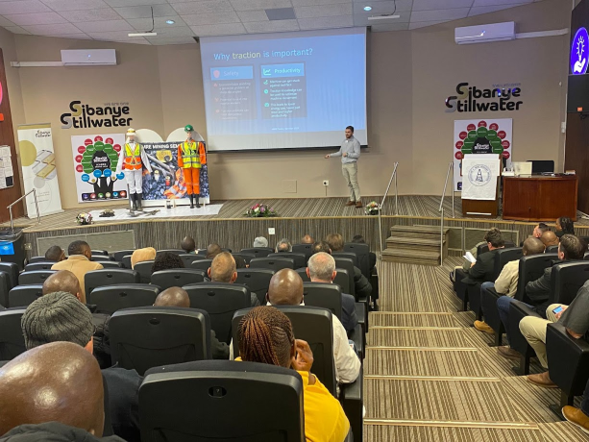
At the 2025 AMRE Safety Seminar, Luke van Eyk presented a traction-estimation digital twin developed around a four-ton ultra-low-profile mining platform. The method uses onboard measurements and a multi-physics model to infer separate longitudinal and lateral traction parameters while the vehicle operates.
Those estimates matter for safety because stopping distance, stability and collision-avoidance thresholds depend on the interaction between the machine and the terrain—not only on nominal brake performance. The same information can support energy prediction, mission planning and terrain-adaptive autonomy.
The presentation connected the research model to a clear intervention: use an updated understanding of the surface to make a safer vehicle decision.